
Museum leaders gather in Philadelphia, send clear message to those who want to erase Black history - Philly Tribune
Article from The Philadelphia Tribune written by Staff Writer Stacy M. Brown
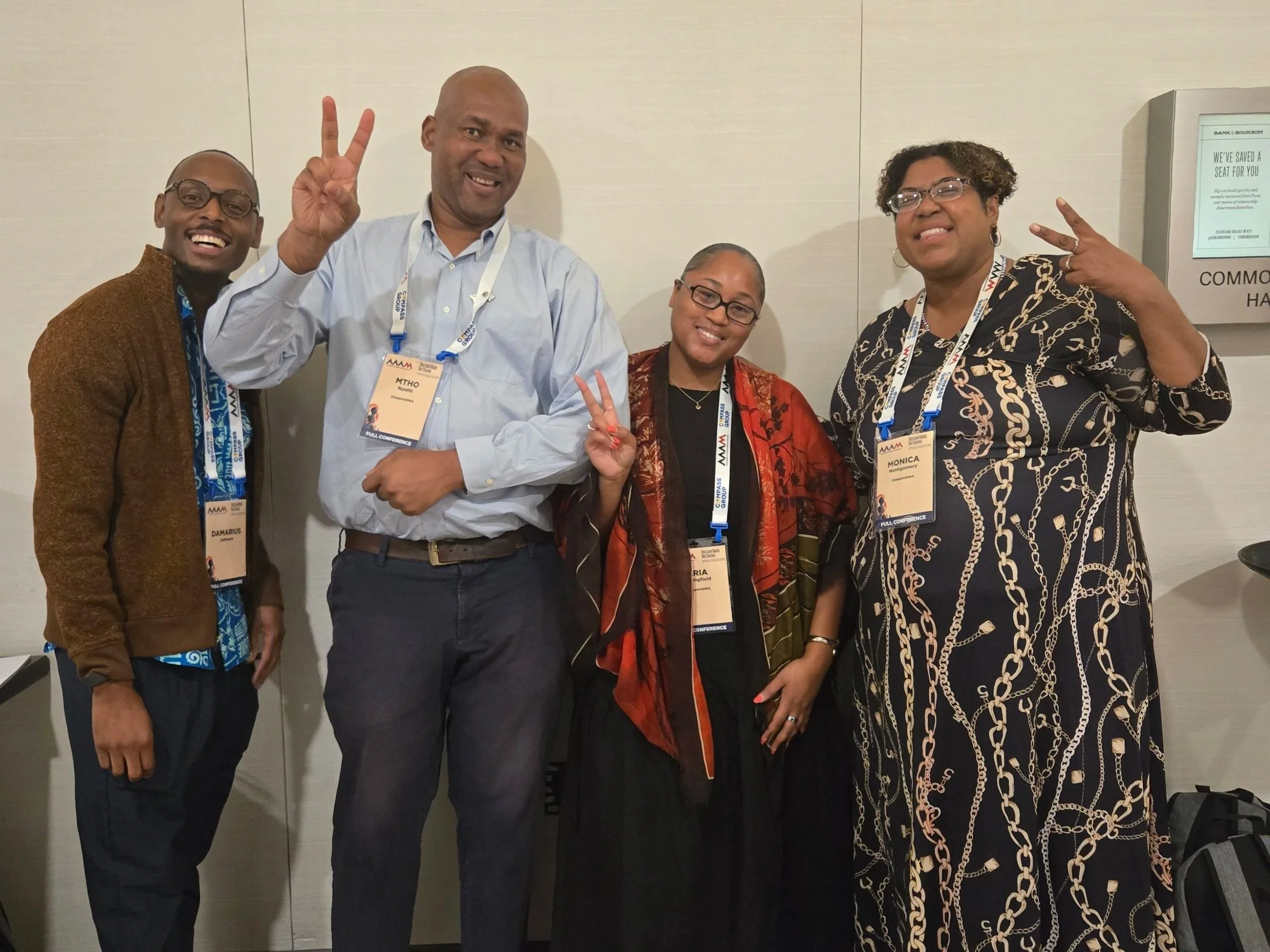
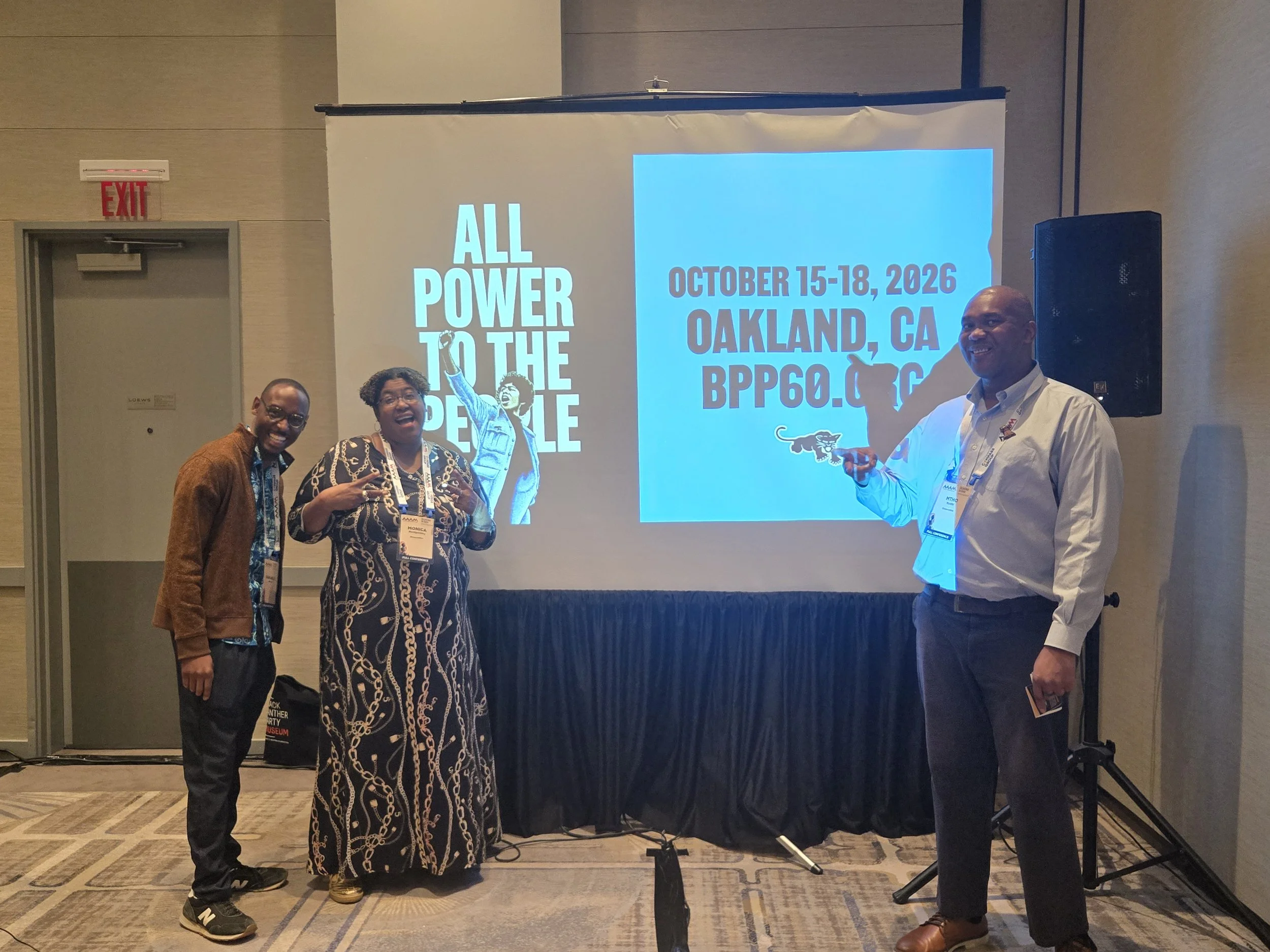
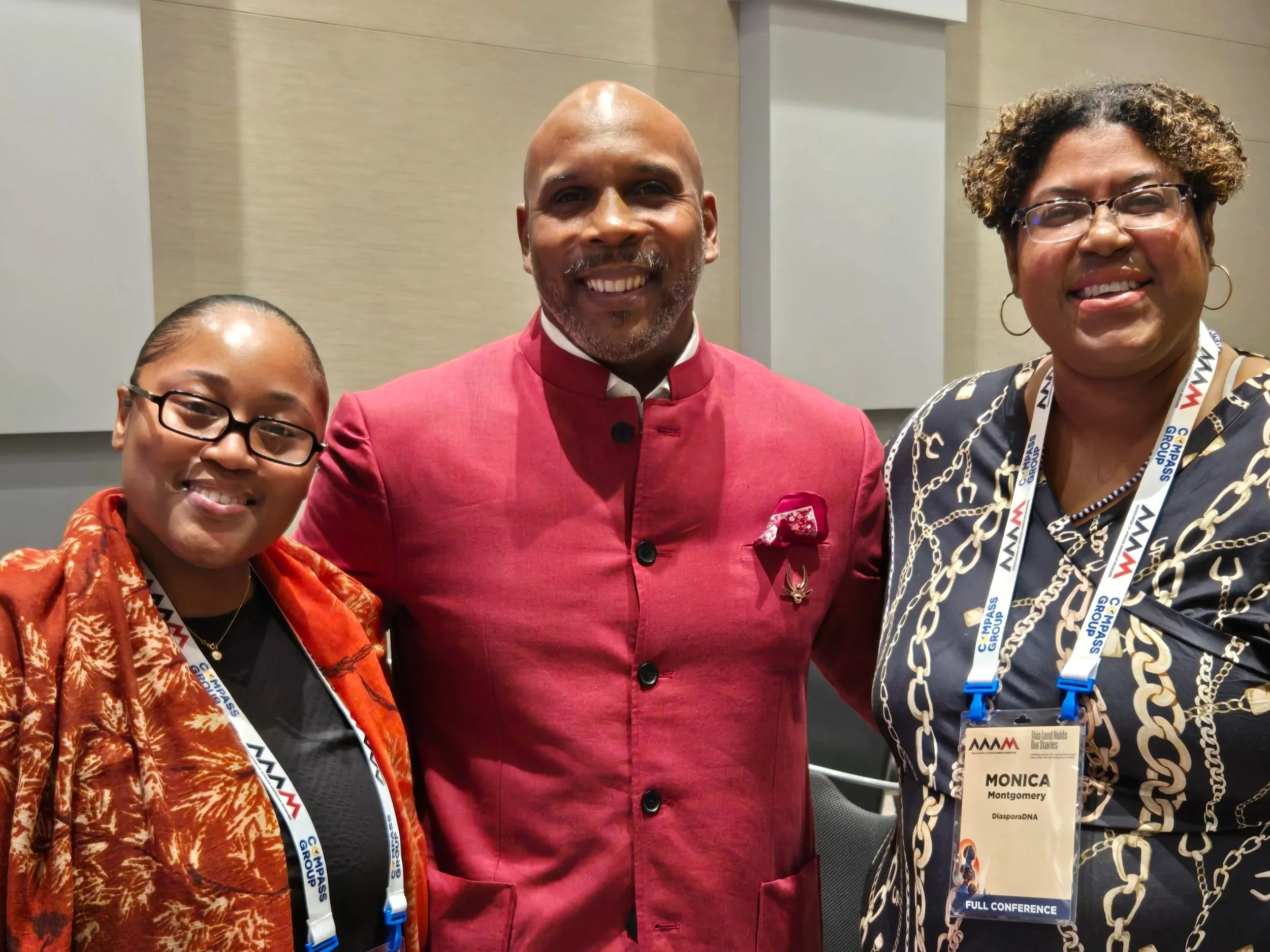
DiasporaDNA Team Members in attendance at AAAM Conference. From left to right: Damarius Johnson - DiasporaDNA Innaugural Scholar in Residence, Mtho Nyathi - Visitor Experience Director, Aria Springfield - Education & Scholarship Advisor, Monica O. Montgomery - President & Founder.
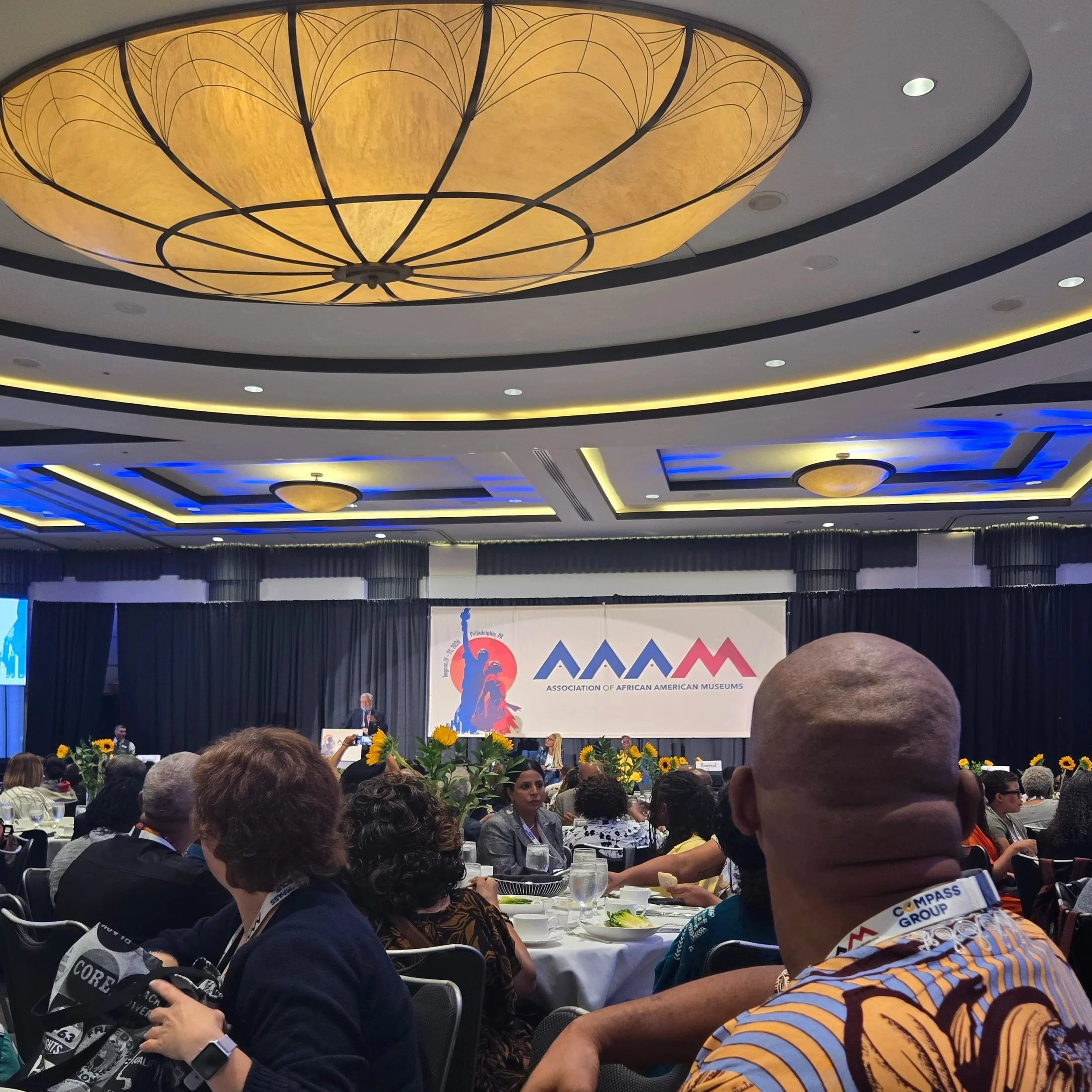
Against a backdrop of political pressure, futile attempts to erase Black history and a presidential administration targeting, diversity, equity and inclusion programs across the federal government, hundreds of cultural institutions gathered in Philadelphia Wednesday as the Association of African American Museums opened its 48th annual conference.
With live music celebrating Black culture, those who spend much of their working lives protecting others’ memories got a chance to dance, eat, laugh and enjoy one another. But nobody needed reminding why their work suddenly feels more urgent.
The five-day gathering, which opened Wednesday at the Philadelphia Zoo, is expected to bring more than 700 people to Philadelphia through Aug. 23 including museum workers, historians, preservationists and cultural leaders.
What no one could ignore is how President Donald Trump’s administration has pushed to change the way slavery, race and other difficult parts of the American story are presented by many of the cultural institutions.
Trump has complained that museums focus too much on the country’s failures and portray America as inherently racist or oppressive.
For people whose careers are devoted to preserving the Black experience, this is not simply another Washington political fight. It is a fight over memory. And standing among them Wednesday night was a man who knows that fight perhaps better than anyone.
Lonnie G. Bunch III, the 14th secretary of the Smithsonian and founding director of the National Museum of African American History and Culture, was on hand to take in the festivities while the institution he leads remains squarely in the administration’s crosshairs.
Bunch, a historian who generally chooses his public words carefully, was asked how he was holding up under pressure, and offered an answer strikingly different from the measured public language normally associated with the nation’s top museum official.
“Forget them cr---kers,” Bunch told The Tribune.
When offered not to print his words, Bunch refused to walk them back.
“Print them,” he said. “Go ahead, please.”
The exchange lasted only a few seconds.
But on a night devoted to people charged with safeguarding Black America’s history, the words hung in the air.
Around Bunch, no one seemed ready to pack up an archive, empty an exhibit case or surrender the story.
“We also know that we’ve been here before,” said Ashley Jordan, president and CEO of the African American Museum in Philadelphia. “And it’s important that we maintain the story. The reason why we’re gatekeepers is so that history won’t repeat itself.”
The current climate emanating from Washington, D.C., has made staying connected even more important for those doing that work, Parker said.
“The mandate for us to continue this work is necessary now more than ever,” she said. “And I think this time really calls on us to really come forward. And that’s what we’re doing.”
“Still Making America Whole”
Philadelphia is a particularly fitting place for that declaration.
The country is marking its 250th anniversary in the city where the Declaration of Independence was adopted. This year also marks the centennial of historian Carter G. Woodson’s launch of Negro History Week, which later became Black History Month. The African American Museum in Philadelphia, founded during the nation’s bicentennial in 1976, is celebrating its 50th anniversary.
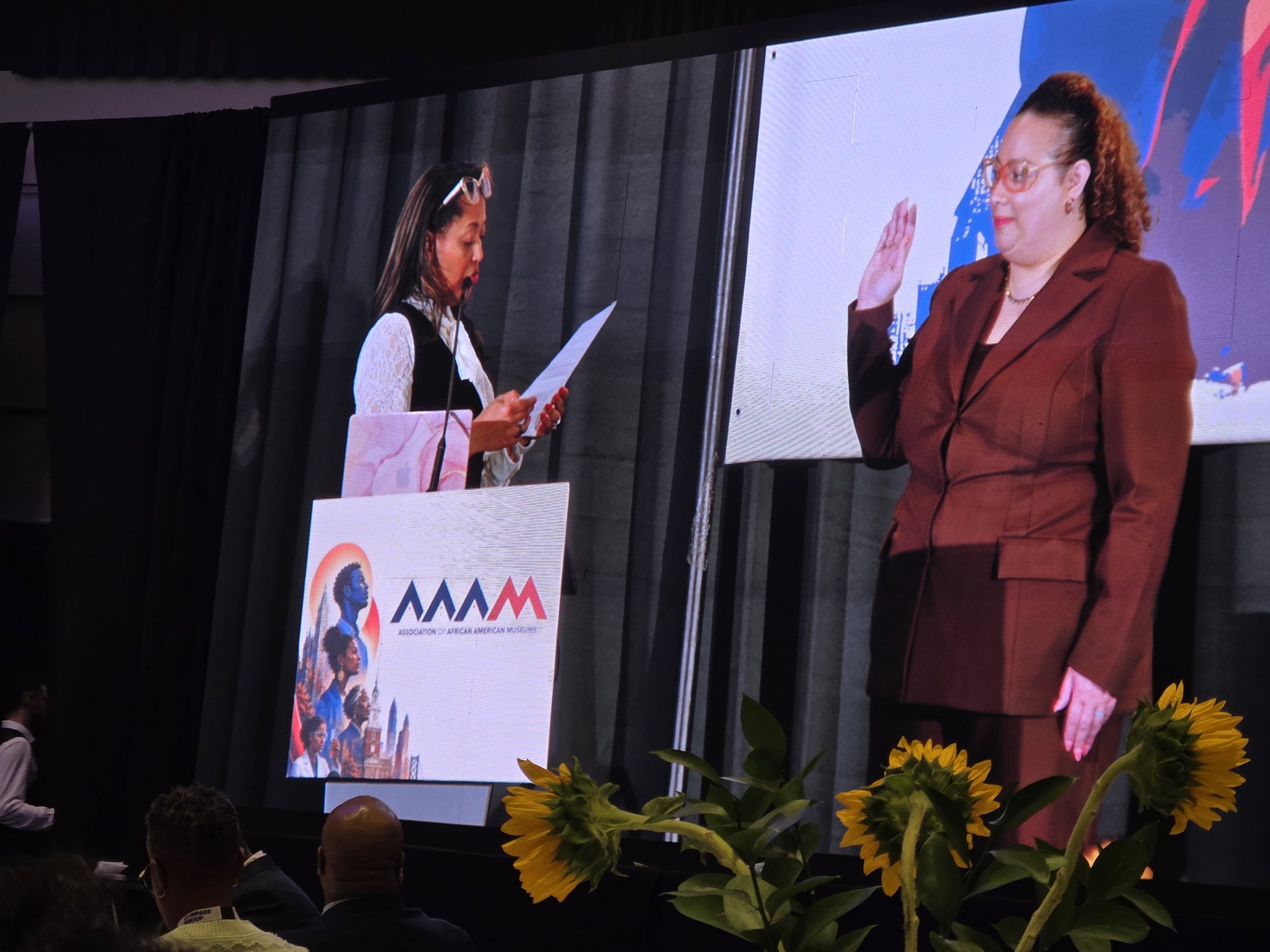
The conference itself refuses to separate those histories. Its theme is “This Land Holds Our Stories: Celebrating America 250 and 100 Years of Negro History Week; We’re Still Making America Whole.”
Sylvia Cyrus, executive director of the Washington-based Association for the Study of African American Life and History, said the fight over Black history extends far beyond museums. “This history belongs to each of our families,” Cyrus said.
She sees evidence that the political pressure may be waking people up rather than driving them off. “Our people are showing up,” Cyrus said. “And when you realize that this attack is against you personally, I think that it is helping to wake the majority of us up.”
Jillian Patricia Pirtle, CEO of Philadelphia’s Marian Anderson Museum and Historical Society, described the gathering as a “communion” among historic African American spaces and people united in preservation.
“We are all universally on a mission here this week to make sure that the living legacy of African American history will be kept and it will move forward in a special way,” Pirtle said.
The goal is to ensure the history is “not erased, not forgotten,” she said.
That mission spans from Philadelphia to Texas, where institutions are finding their own ways to protect and expand the Black historical record.
The full story
Jarred Howard, CEO of the National Juneteenth Museum in Fort Worth, Texas, said his institution’s mission remains clear: tell the story accurately. “America doesn’t know the story,” Howard said.
One misconception, he said, is that enslaved people in Texas first learned of emancipation on June 19, 1865. The museum is assembling researchers committed to telling the fuller story. “Nobody can impair our ability to find out about the story.”
Howard also rejects the notion that Juneteenth belongs exclusively to one race or political party. “They tell us that the bedrock of America is freedom,” he said. “Juneteenth is all about freedom.”
“It’s not white, Black, left, right, D, R,” he added. “It’s a story that resonates with everybody.”
Not a side chapter
That argument was evident throughout Wednesday’s celebration. The museums represented at the zoo varied in size, geography and subject matter, but their representatives shared the belief that Black history is not a side chapter in the American story.
Val Gay, Philadelphia’s chief cultural officer and executive director of Creative Philadelphia, welcomed the visitors on behalf of Mayor Cherelle L. Parker and highlighted the convergence of America’s 250th anniversary, the centennial of Negro History Week, and AAMP’s 50th anniversary.
“Gatherings like this remind us of why we do this work, how much it means to others, and perhaps most importantly, that none of us is doing this work alone,” Gay said.
“We are a community. We are part of a network that is bigger than any one museum or institution.”
Even the venue carried its own bit of history.
Jo-Elle Mogerman, president and CEO of the Philadelphia Zoo, reminded visitors that the institution was chartered in 1859 and opened after the Civil War. She also noted that she is one of only four African American presidents and CEOs of accredited zoos nationwide.
“I am honored to be talking with my people today,” Mogerman told the crowd.
Powerful reminder
One of the night’s most powerful reminders of what preserving history can mean came from nearly 1,800 miles away.
Deborah Omowale-Jarmon, CEO and executive director of the San Antonio African American Community Archive and Museum, told the crowd about her organization’s effort to transform historic department-store buildings into a 103,000-square-foot cultural center.
One of those stores, she recalled, was a place where Black customers could spend their money but not try on the clothes. It had a cafeteria, but Black customers could not sit down to eat.
Now, a Black museum is taking possession of that space and changing what it represents.
“A place that once told us where we could not sit is going to become a place where our stories stand,” Omowale-Jarmon said.
The crowd erupted.
Her story captured what much of the evening. Despite the political pressure, nobody seemed particularly interested in holding a funeral for Black history on Wednesday night.
They were too busy celebrating.
Music moved through the zoo. Museum delegations cheered each other. People ate and drank, exchanged ideas and business cards, embraced friends and danced.
“This is the family reunion of all family reunions,” said Dexter Evans, Deputy Director of Strategy & Advancement at the National Museum of African American Music in Nashville. “This is the cookout. It’s the family reunion. It’s the homecoming of Black museums.”